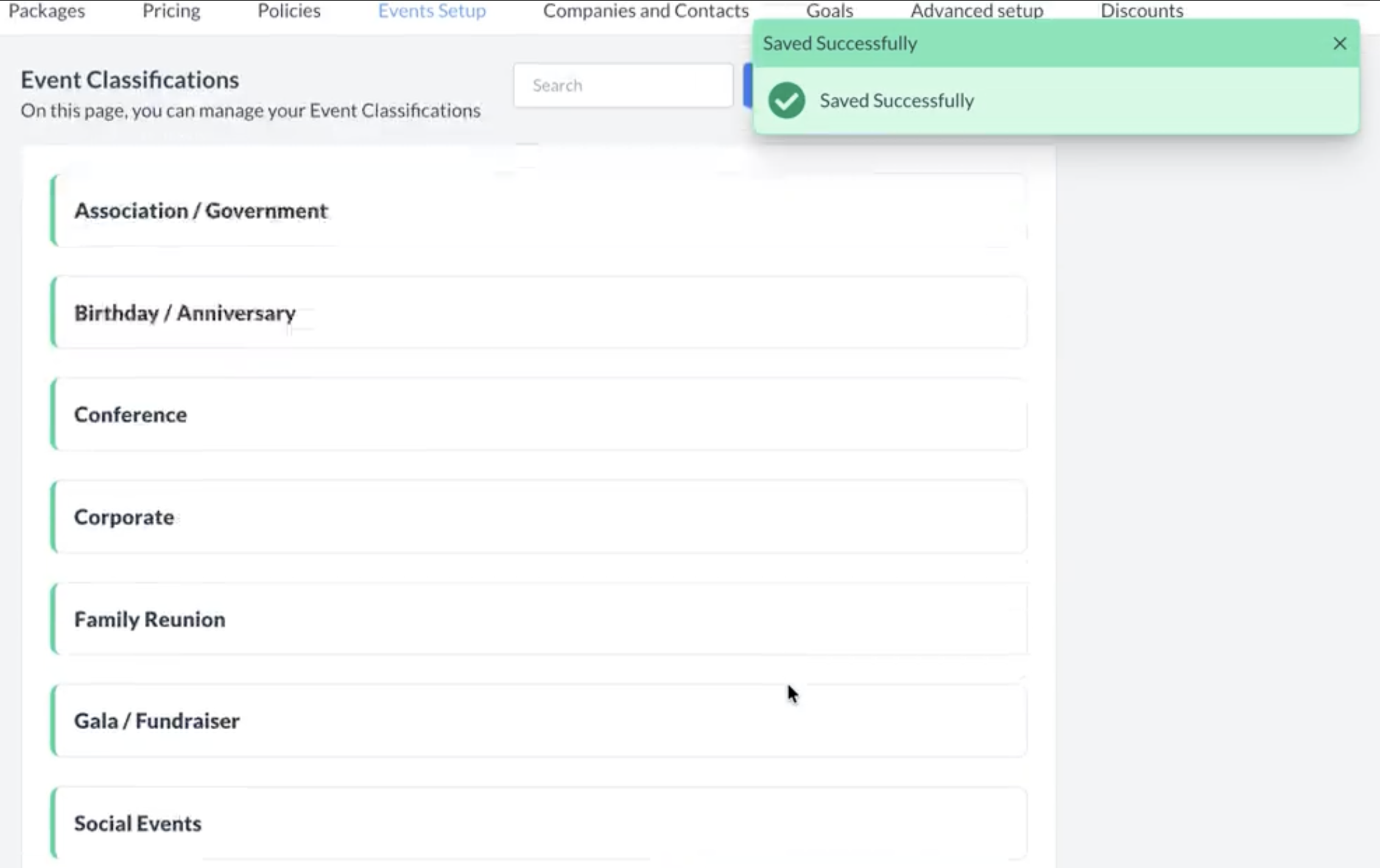
In EventKey, Event Classifications categorize meetings, banquets, and group functions into structured business segments—such as Corporate, Association / Government, Social Events, Galas / Fundraisers, or Family Reunions. This high-level categorization standardizes operational planning, ensures appropriate resource allocations across departments, and drives business intelligence and forecasting reports. Administrators can create new classifications, manage active/inactive visibility across booking channels without deleting historical records, and ensure classification tags seamlessly feed into Sub-Event scheduling wizards, Event Records, and Banquet Event Orders (BEOs).
Configuration Guide: Creating an Event Classification
System Navigation Path
Home > Event Administration > Events Setup > Event Classifications > + Add New
Step
Action
Platform Guidance & Operational Details
Access Event Classifications
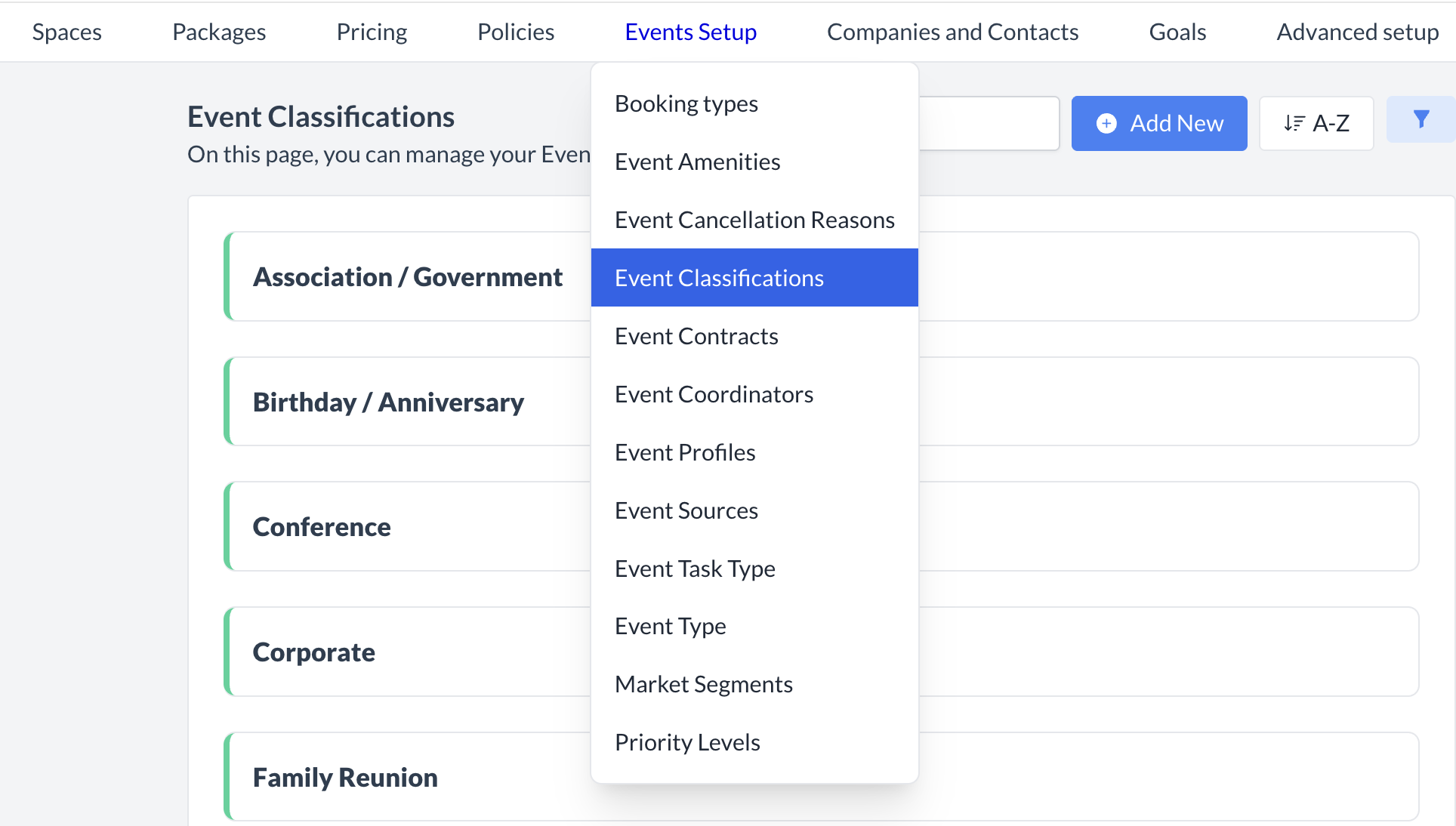
In EventKey Administration, hover over the Events Setup tab in the main navigation bar and select Event Classifications from the dropdown menu.
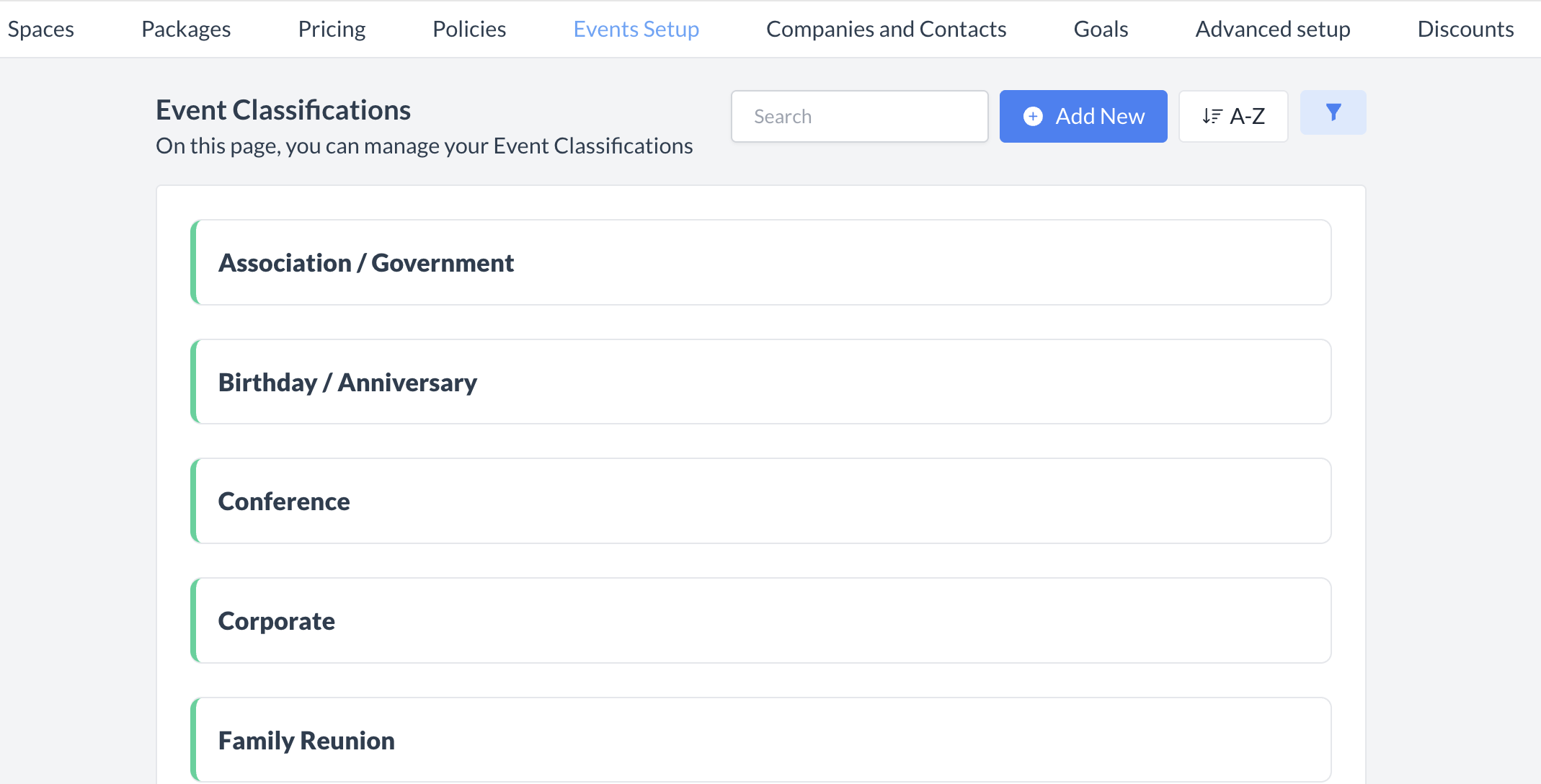
Opens the Event Classifications directory displaying configured segments, search bar, sort options, and action controls.
Initiate Creation
Click the blue + Add New button located in the upper-right corner next to the search and sort tools.
Opens the Add Event Classification configuration screen with the Active toggle enabled by default.
Enter Classification Name
In the Name input field, type the descriptive title for the business segment (e.g., Social Events or Family Reunion).
Establishes the display name utilized across event booking forms, sales logs, and analytical reports.
Save & Deploy
Click the blue Save button located below the name input field.
Validates the entry, displays a green top-right notification banner (Saved Successfully: Saved Successfully), and publishes the classification to the active directory.
Verify Directory Placement
Review the refreshed Event Classifications directory list.
Confirms the newly created category (e.g., Social Events) appears with an active green sidebar indicator.
(Left) The Events Setup navigation dropdown menu highlighting Event Classifications; (Right) The Event Classifications directory listing existing segments (e.g., Association / Government, Birthday / Anniversary, Conference, Corporate), the search input box, sort controls (A-Z), and the blue + Add New button.
If a particular event segment is seasonal, retired, or no longer marketed by the property, administrators can deactivate it to remove it from new booking selection menus without impacting past bookings or historical revenue reports.
Workflow
Step-by-Step Procedure
System Impact
Deactivating an Event Classification
Navigate to Events Setup > Event Classifications.
Click directly on the target classification card to open the edit screen.
In the upper-right corner, toggle the Active switch from ON to OFF.
The system automatically saves the update upon switching the toggle. The classification receives a grey indicator bar and is removed from active booking dropdowns while preserving historical data.
Reactivating an Event Classification
In the Event Classifications directory, click the status filter dropdown in the top-right header and select Inactive (or All).
Locate the inactive classification (marked with a grey sidebar) and click to open.
In the edit header, switch the Inactive toggle to Active (ON).
Instantly restores the classification with a green sidebar indicator, making it immediately available for new event reservations and sub-event creation.
📷 VISUAL CALLOUT:
Active vs. Inactive Classification Status Controls
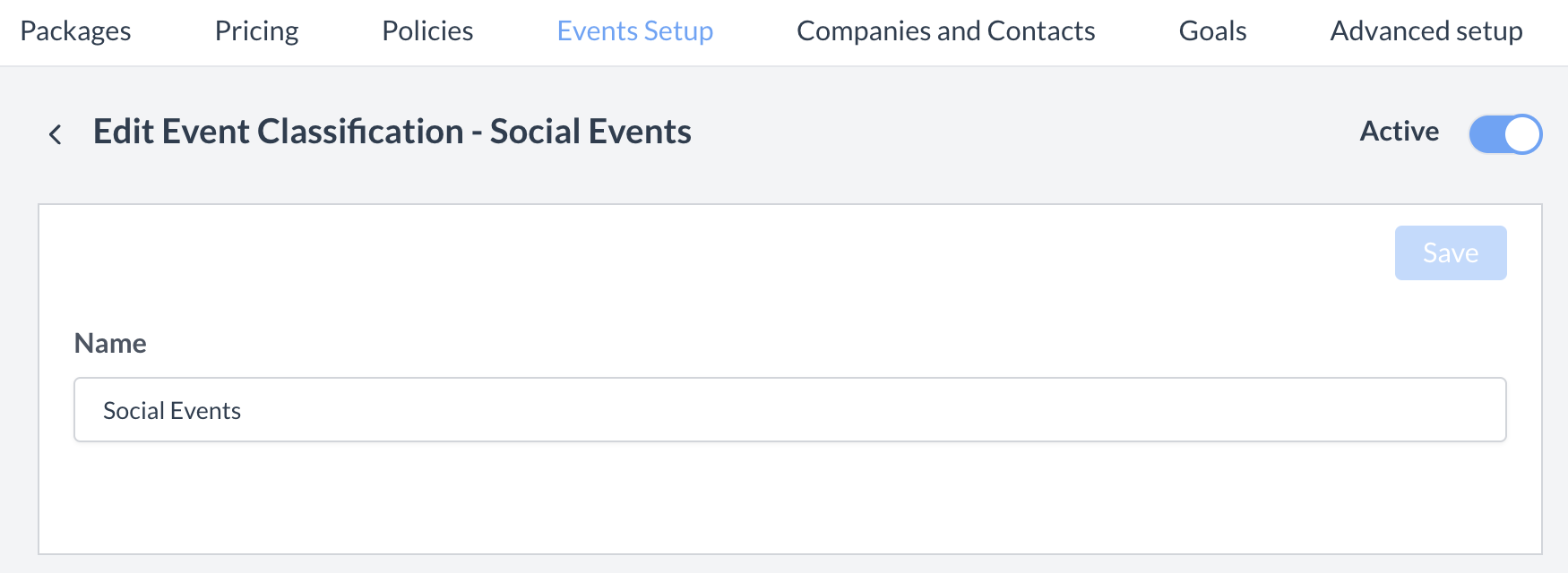
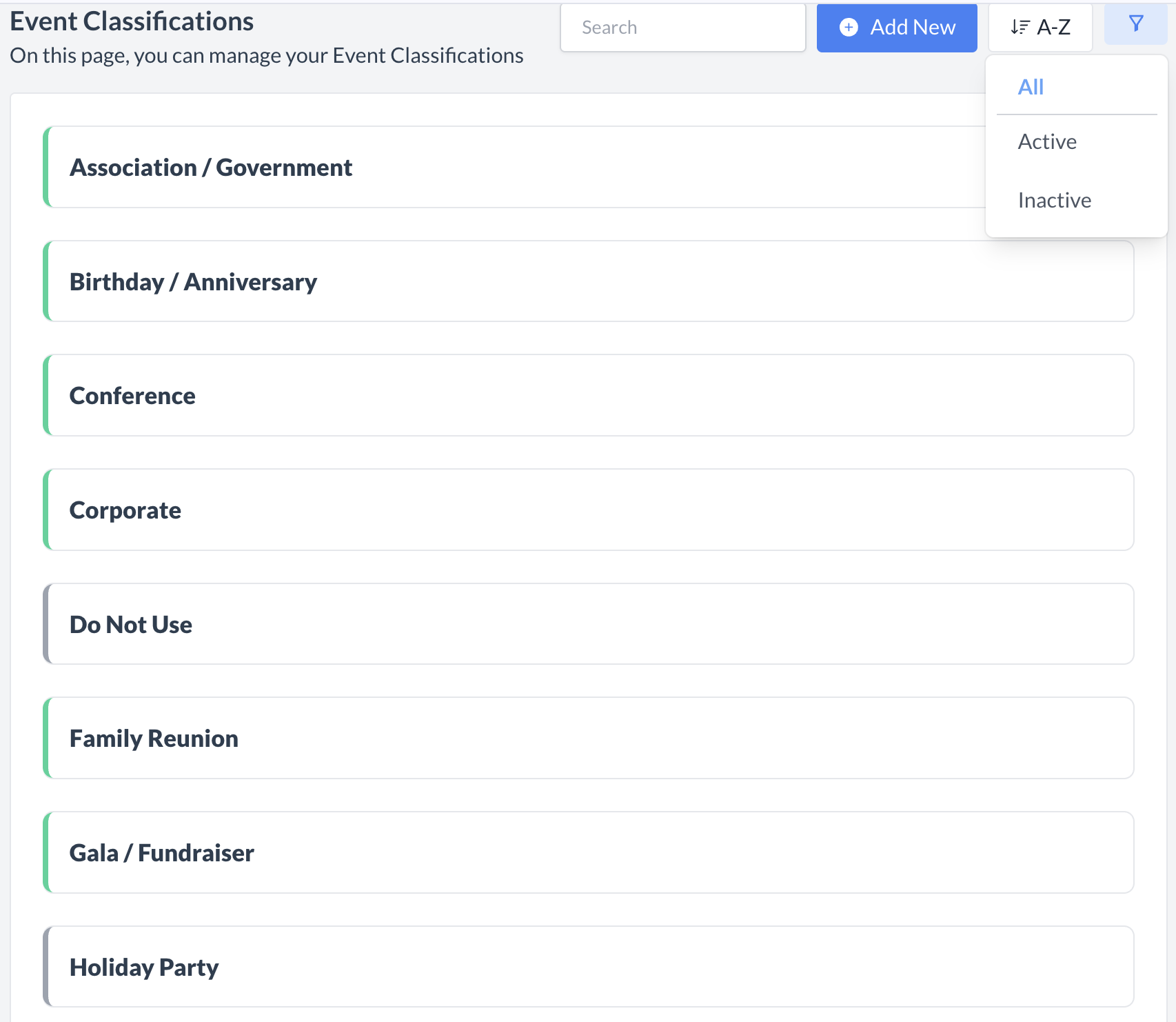
(Left) The Edit Event Classification screen displaying the top-right Active toggle switch; (Right) Directory view comparing active classifications (marked with a green vertical sidebar) against inactive classifications (marked with a grey vertical sidebar), alongside the status filter dropdown (All, Active, Inactive).
Event Classification Status Control
Active (marked with a green vertical sidebar) and Inactive (marked with a grey vertical sidebar)
Breadcrumb Navigation: Displays system context (< Add Event Classification) with an interactive back arrow to exit without saving.
Active Status Toggle: Located in the upper-right corner; controls whether the classification is immediately accessible across front-line booking workflows.
Name Field*: Required single-line text input capturing the formal display title of the classification (e.g., Social Events, Corporate, Trade Show, Training Session, Wedding, Gala / Fundraiser).
Save Button: Blue action button that commits the classification record to the database and refreshes the directory.
📷 VISUAL CALLOUT:
Add Event Classification Configuration Screen
Form screen displaying the Name input field populated with Social Events, the top-right Active toggle set to ON, and the blue Save button below.
Event Classification Configuration Walk
2. Directory Navigation & Utility Controls
Search Field: Interactive text query box (Search) enabling instant real-time filtering of classifications by keyword.
Alphabetical Sort Toggle (A-Z / Z-A): Reorders classification cards alphabetically in ascending or descending order.
Status Filter Dropdown: Header utility allowing operators to filter between All, Active, and Inactive classification records.
Classification Cards: Renders the classification name flanked by a visual status indicator bar (Green = Active; Grey = Inactive).
📷 VISUAL CALLOUT:
Refreshed Event Classifications Directory
Listing screen showing the green top notification banner (Saved Successfully: Saved Successfully) with the newly added Social Events card listed with an active green sidebar indicator.
Downstream UI & Operational Touchpoints
Once configured and activated, Event Classifications integrate across several key operational interfaces in EventKey:
Sub-Event Creation & Modification: When building or editing a sub-event within an event booking, operators select the business segment from the Event Classification dropdown menu (e.g., Gala / Fundraiser, Social Events).
Event Record (Reservation Details): On the main event management dashboard, the assigned classification displays under the Spaces and More Information summary panels for operational tracking.
Banquet Event Orders (BEOs): The classification displays in setup and sub-event summaries, communicating the formal context of the gathering to banquet teams, culinary departments, and setup crews.
Sales & Revenue Reporting: Enables management to filter catering revenue, room rental pickup, and food/beverage spend by specific market classifications to analyze profitability and business mix trends.